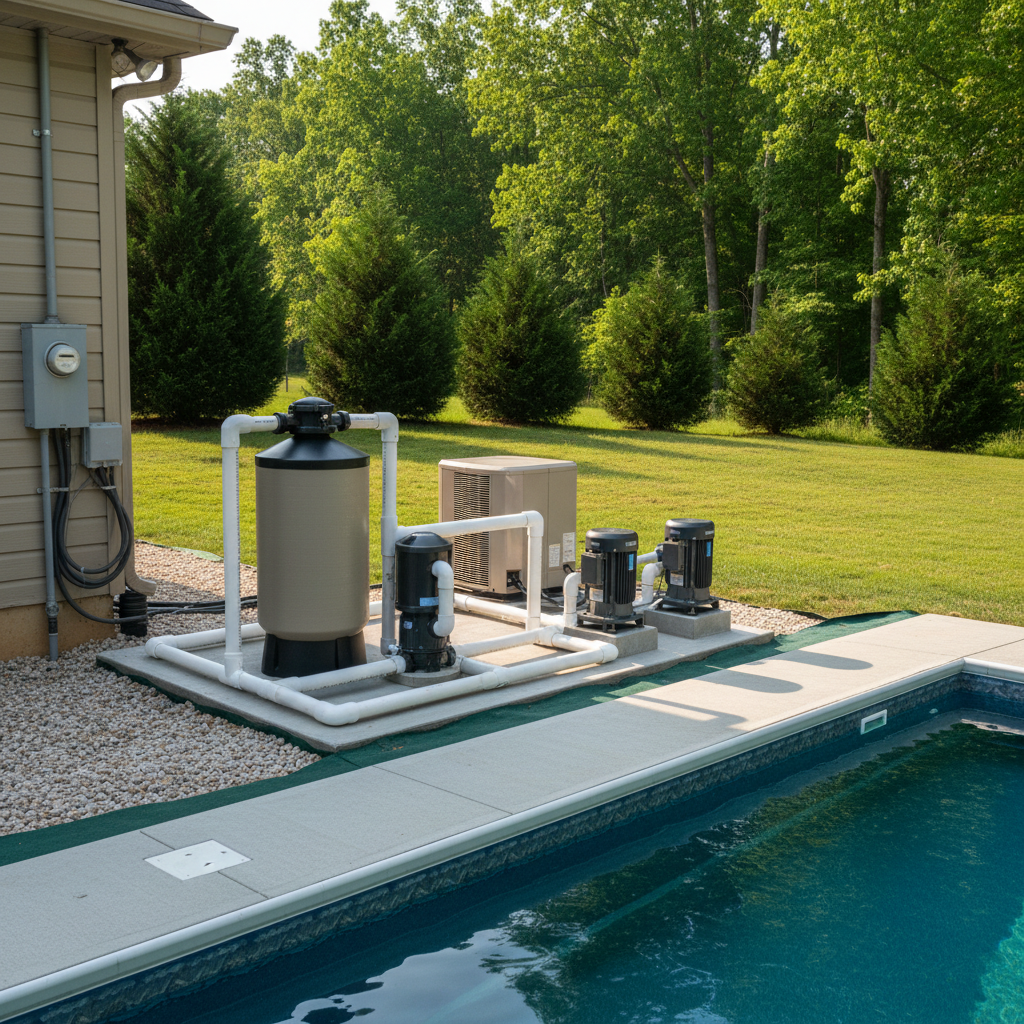
So, you're thinking about upgrading your pool equipment? Or maybe you're building a whole new pool and trying to get a handle on the budget. Smart move, doing your homework. It's totally normal to get a bit of sticker shock when you first see the prices for pumps, filters, heaters, and all the other gadgets that keep your pool sparkling. But hey, if you understand what goes into that final number, you can save yourself a lot of headaches – and some cash too.
What Makes Pool Equipment Installation Cost What It Does?
A few big things really make the price of new pool equipment go up or down. It's not just the equipment itself, you know; it's all the other stuff that comes with it.
- The Equipment Itself (Type and Quality): This one's pretty obvious, right? A basic single-speed pump costs a lot less than a fancy variable-speed model. A small cartridge filter will be cheaper than a big DE filter. And if you're dreaming of a heat pump instead of a gas heater, well, you're looking at a completely different price point. Higher quality, better efficiency, or cooler features (like smart controls) always mean you'll pay more upfront.
- How Tricky the Installation Is: Are we just swapping out an old pump for a new one in the exact same spot? That's usually pretty straightforward. But what if we're adding a brand new piece of equipment, like a heater, where there wasn't one before? That could mean running new gas lines, electrical circuits, or even plumbing. If your current setup is old, or just a bit weird, or if we have to dig up your yard because the equipment pad is in an awkward spot, all that adds time and labor.
- Electrical and Plumbing Needs: Folks often forget about this one, but it's a big deal. Modern, super-efficient equipment often needs its own dedicated electrical circuits. If your current electrical panel is full or too far away, you might need an electrician to run new lines, put in a sub-panel, or even upgrade your main service. Plumbing is the same story – if we're adding something like an automatic chemical feeder, we have to connect it correctly to your existing pipes.
- Site Conditions: Can we easily get to your equipment pad? Is it a nice concrete slab or just dirt? If we're installing a heavy heater, is there a clear path to roll it in? Sometimes, especially in older homes around West Maryville where equipment pads might be tucked away or on uneven ground, we have to do extra work just to get things into place.
- Permits and Inspections: Depending on what you're installing, especially if it involves gas or electrical work, you might need permits from the county. This isn't just about paperwork; it means inspections to make sure everything meets code. That's good for your safety, of course, but it does add a little bit to the cost and a bit of time to the project.
Typical Cost Ranges for Equipment Installation in Maryville
Look, I can't give you an exact quote right here, but I can give you some realistic ranges based on what we see every day at Valley Pools. These numbers cover the installation labor and materials, *not* the equipment cost itself, which, as you can imagine, varies wildly.
- Basic Pump Swap (like-for-like): If it's a simple swap – same size, same location – you're probably looking at $300 to $600. That covers draining, disconnecting the old one, hooking up the new one, and testing it out.
- Filter Replacement: Again, if it's a straightforward swap, expect $350 to $700. If we're upgrading from a small cartridge to a larger sand or DE filter, it could be more because of plumbing adjustments.
- Heater Installation (Gas or Heat Pump): This is where things get more involved. For a new heater where there's already gas/electrical and plumbing right nearby, you might pay $800 to $1,500. If we need to run new gas lines, dedicated electrical circuits, or significant plumbing, that can easily jump to $1,800 to $3,500 or even more, depending on how far we have to run those new utility lines and how complex it is.
- Salt System Installation: For adding a salt chlorine generator to an existing setup, expect $400 to $800. This usually means a few plumbing cuts and electrical hookups.
- Automation System Installation: These vary a lot based on features, but for installing the main control panel and connecting your existing equipment, you're looking at $600 to $1,200. Adding new sensors or actuators will definitely increase that price.
Remember, these are just ranges. The actual equipment cost will be on top of this. A good variable-speed pump alone can run you $1,000 to $2,000. A quality heat pump? That could be $4,000 to $8,000 or even more. So, yeah, you can see how quickly the total bill adds up, can't you?
What Should a Good Quote Include?
When you get a quote from me or any other reputable contractor, it needs to be clear and detailed. Don't accept a one-liner that just says